
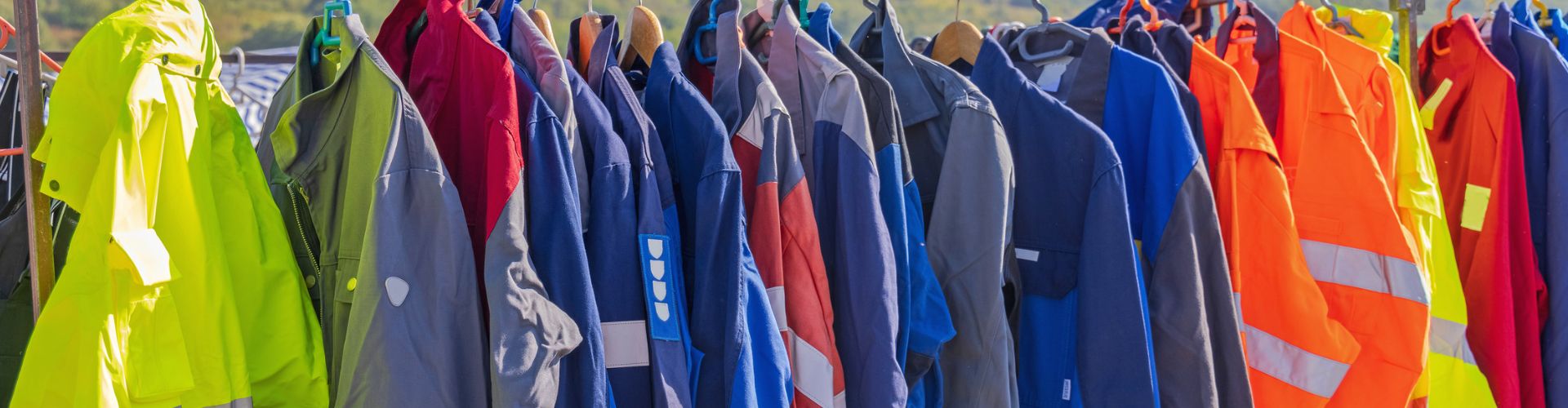
Choosing the right workwear involves more than finding something durable and comfortable. Different working environments place different demands on clothing, and the type of garment employees wear can influence everything from ease of movement to workplace hygiene and safety.
Conti suits, boiler suits and dust coats are commonly used across industrial and commercial environments, but each has a different design and purpose.
Understanding these differences can help businesses select workwear that suits their employees’ daily responsibilities and working conditions.
What Is a Conti Suit?
A conti suit is a two-piece work suit consisting of a jacket and matching trousers. It is a familiar choice in industries such as manufacturing, engineering, mining and warehousing, where employees need practical clothing suited to their daily tasks.
One advantage of the two-piece design is its flexibility. Jackets and trousers can be sized individually, making it easier to accommodate different body shapes. Depending on workplace requirements, employees may also be able to remove their jackets when appropriate.
Conti suits are available in different fabrics and designs, allowing businesses to consider options suited to their working environments.
What are Boiler Suits and Dust Coats?
A boiler suit provides more continuous coverage than a two-piece work suit, which may be useful where employees regularly work around dirt, dust or grease. However, the garment’s protective capabilities depend on its material, construction and intended application.
Dust coats are commonly used as an outer garment in selected industrial, laboratory and hygiene-focused environments. Their suitability depends on garment design, fabric, workplace requirements and the tasks being performed.
Neither option is necessarily better than the others. The most suitable choice depends on the work being performed and the conditions employees encounter.
Conti Suit vs Boiler Suit vs Dust Coat: A Reference Guide
Although these garments are sometimes grouped together as industrial workwear, their designs serve different purposes.
| Garment | Design | Common application |
|---|---|---|
| Conti Suit | Two-piece jacket and trousers. | Manufacturing, engineering, mining and general industrial work. |
| Boiler Suit | One-piece garment covering the torso, arms and legs. | Maintenance, mechanical work and environments where more continuous clothing coverage is useful. |
| Dust Coat | Loose-fitting outer coat, generally worn over other clothing. | Laboratories, selected industrial applications and hygiene-focused food production environments where the garment design is appropriate. |
Choosing Workwear for Different Industry Requirements
In mining and engineering, for example, businesses may need to consider garment durability, visibility and exposure to specific workplace hazards. Manufacturing and logistics operations might place greater emphasis on ease of movement and comfort during physically demanding tasks.
Food processing introduces another set of considerations, particularly around hygiene and contamination control. Businesses operating under a Hazard Analysis and Critical Control Points (HACCP) food safety system may have specific requirements concerning garment design, handling and laundering. Therefore, the organisation is responsible for determining appropriate controls within its food safety management system, including the suitability of workwear for different operational areas.
For more information, read our guide to HACCP and the role of workwear in food safety systems.
Fabric and Fit: Two Important Considerations
Once you’ve identified a suitable garment style, the next step is to consider the fabric and fit.
Polycotton is commonly used for general industrial workwear, while cotton and specialised fabrics may be considered for applications with different comfort, durability or performance requirements. Fabric selection should take account of the working environment, potential hazards and relevant garment specifications.
Fit is equally important. Clothing that is excessively loose or restrictive can interfere with movement and may introduce additional risks around certain machinery or equipment.
Our fabric selection guide provides more information about the materials available within the First Garment Rental range.
Should You Buy or Rent Industrial Workwear?
After choosing suitable garments, businesses also need to decide how they will source and manage their workwear.
Purchasing conti suits, boiler suits or dust coats gives an organisation direct control over its garment stock, but also means considering how laundering, maintenance and replacements will be managed.
Garment rental offers an alternative approach. Depending on the provider and agreed arrangements, rental services may combine garment supply with industrial laundering and other garment management activities. Beyond garment supply, a structured rental arrangement can support the ongoing management of workwear through laundering, garment inspections, maintenance and replacement processes. This approach helps businesses manage garment condition and availability throughout the garment lifecycle.
Through our First Garment Rental division, we provide workwear rental and laundering solutions for a range of industries. The available options can be discussed according to the business’s operational requirements.
Discover more about the benefits of garment rental.
Frequently Asked Questions
What is the difference between a Conti suit and an overall?
A Conti suit is a two-piece garment, while the term overall is often used more broadly to describe different styles of industrial workwear, including one-piece boiler suits.
Is a Conti suit considered PPE?
A Conti suit may form part of an organisation’s personal protective equipment (PPE), depending on its specifications and intended protective function. Ordinary workwear does not automatically qualify as suitable PPE for every workplace hazard.
Can Conti suits be customised with company branding?
Branding options, such as embroidered or heat-sealed logos, may be available depending on the garment and service arrangements.
How often should industrial workwear be laundered?
Laundering frequency depends on factors such as the working environment, level of soiling, contamination risks and the organisation’s hygiene procedures.
Find Suitable Workwear With First Garment Rental
Whether you’re considering conti suits, boiler suits or dust coats, selecting workwear that suits your operations is an important part of managing your employees’ clothing requirements.
At Bidvest Laundry, our First Garment Rental division offers a range of industrial workwear and garment rental solutions.
Contact our team to discuss your requirements and explore the available options.