
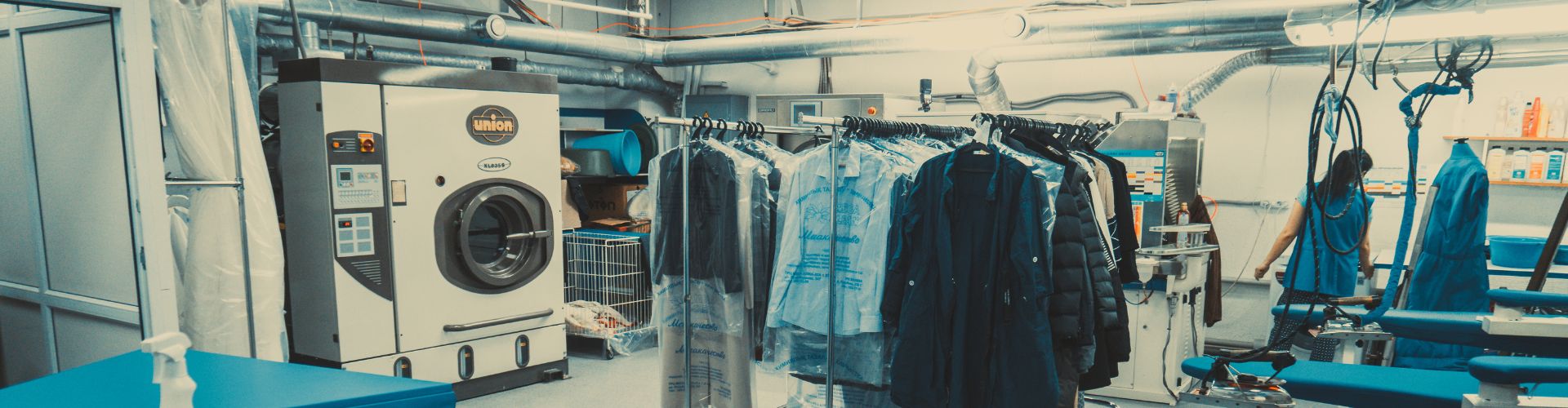
For businesses that rely on a regular supply of clean linen, garments and workwear, the laundry process involves more than washing. Once textiles have been cleaned, they need to be dried, handled, sorted and prepared according to their intended use and the requirements of the customer.
Depending on the textile type and contracted service, finishing may include processes such as industrial ironing for selected flatwork linen, folding, sorting, quality checks and preparation for delivery. Garments and workwear follow their own laundering and handling requirements, with additional finishing specifications determined by the customer’s needs.
Understanding these differences is important when choosing a commercial laundry provider. A suitable service should be able to process different textile categories according to their specific requirements rather than applying the same finishing process to every item.
What Is Included in Commercial Laundry Finishing?
Commercial laundry finishing refers to the processes that take place after textiles have been washed and dried, preparing them for return to the customer.
The exact process depends on the textile, its intended use, the volume being processed and the customer’s contracted service requirements.
This may include:
- Flatwork ironing: Selected flatwork linen, such as sheets, duvet covers, pillowcases, napkins and table linen, may undergo industrial ironing where this forms part of the contracted laundry service.
- Garment and workwear laundering: Garments and workwear are professionally laundered and prepared according to the agreed service specification. Additional finishing requirements may be provided where specifically included in the customer’s contract.
- Folding and sorting: Depending on the textile type and service requirements, clean items may be folded, sorted and organised for storage, distribution or delivery.
- Quality control and preparation: Processed textiles may undergo checks before being packed and returned to the customer.
The distinction between linen and garments matters. Selected flatwork linen may require industrial ironing to achieve the desired finish, while garments and workwear are laundered and handled according to their specific service requirements.
It is important to note that pressing is not a standard garment service and should only be considered where it has been specifically agreed as part of the customer’s contract.
Why Outsource Commercial Laundry and Finishing?
Managing laundry requirements internally can require dedicated equipment, labour, space and processes. For businesses handling significant volumes of linen, garments or workwear, outsourcing these requirements to an industrial laundry provider may help simplify textile management.
Reduce Internal Laundry Requirements
Outsourcing can reduce the need for businesses to manage washing, drying, sorting and other laundry processes internally. This may allow employees to focus on their primary operational responsibilities rather than managing textile processing.
Avoid Investment in Laundry Equipment
Industrial laundry requires specialised machinery, infrastructure and ongoing maintenance. Using an external provider can help businesses avoid investing in equipment that may otherwise be required to process commercial volumes.
Support Consistent Textile Processing
A contracted commercial laundry service is designed to process textiles according to defined procedures and customer requirements. This can support consistency across recurring collections and deliveries, subject to the agreed service specification.
Manage Larger Volumes
Commercial laundry operations are equipped to handle substantial volumes of textiles. This can help businesses manage recurring laundry requirements where processing large quantities in-house would place additional demands on staff, equipment and facilities.
How Do Linen and Garments Differ During Finishing?
Not all textiles require the same treatment after washing.
Flatwork linen is often suited to industrial finishing processes because large, flat items can be processed using specialised equipment. Where included in the contracted service, selected bed linen and table linen may undergo industrial ironing before being folded and prepared for delivery.
Garments and workwear require a different approach. Their fabrics, construction, intended use and industry requirements can influence how they are laundered, dried, handled and prepared. Bidvest Laundry Group provides garment and workwear laundering as part of its managed laundry and garment solutions, with processing determined by the relevant service specification.
Pressing should therefore not be assumed to form part of every garment laundry service. Where a customer requires additional finishing, this can be assessed according to the textile type, operational capability and agreed contract.
Which Businesses Can Benefit from Commercial Laundry Services?
Commercial laundry supports businesses across industries where clean linen, garments or workwear form part of daily operations. The specific laundering and finishing requirements will vary according to the sector and the textiles being processed.
- Hospitality: Selected bed linen and table linen may undergo flatwork ironing where included in the contracted laundry service. Towels and garments are processed according to their textile type and agreed finishing requirements.
- Healthcare: Patient linen and healthcare garments are laundered and handled according to defined customer and operational requirements. Pressing is not provided as a standard garment service.
- Food production and food service: Protective clothing and workwear can be laundered as part of an agreed garment service. Food production environments may require controlled garment processes that support the customer’s documented food safety and hygiene procedures.
- Corporate and industrial workplaces: Workwear and staff garments are laundered according to the contracted service specification. The service should therefore be considered as part of managed garment and industrial laundry rather than as a general corporate clothing or garment-pressing service.
These are just some of the industries that can benefit from commercial laundry services, with solutions also available for other businesses whose operations require professionally laundered linen, garments or workwear.
How Finishing Fits Into a Managed Laundry Service
Finishing is one part of a broader commercial laundry process. Depending on the customer’s requirements, textiles are collected, sorted, laundered, dried and prepared before being returned.
For linen, this may include additional flatwork finishing, folding and packing. For garments and workwear, processing is based on the garment type, fabric, intended use and agreed service requirements.
This integrated approach allows businesses to manage their textile requirements through an established laundry system rather than having to coordinate individual washing, drying, ironing or pressing services separately.
Bidvest Laundry Group operates through a network of laundry facilities and divisions across South Africa, with service availability determined by the customer’s location, textile type, volumes, operational requirements and the capabilities of the relevant operation.
Choosing the Right Commercial Laundry Provider
When comparing commercial laundry providers, businesses should look beyond whether a company offers washing alone. The right provider should be able to understand the different requirements of the textiles being processed and provide a service that aligns with the customer’s operational needs.
Consider factors such as:
- Textile-specific processing: Different garments, workwear and linen require different handling and laundering processes.
- Volume capacity: The provider should be able to accommodate the expected volume and frequency of laundry.
- Defined service specifications: Requirements for laundering, finishing, sorting and delivery should be clearly established in the service agreement.
- Quality and hygiene processes: Commercial laundry should operate according to appropriate quality, hygiene and safety procedures for the industries being served.
- Operational coverage: Service availability depends on the customer’s location and the capabilities of the relevant laundry operation.
- Additional finishing requirements: Where ironing, pressing or other finishing is required, these should be discussed and agreed based on the textile type and customer contract.
A managed commercial laundry service brings these requirements into a structured process, helping businesses maintain a reliable system for handling their linen, garments and workwear.
Talk to Bidvest Laundry Group About Your Laundry Requirements
There is no single finishing process that applies to every commercial textile. Linen, garments and workwear each have different processing requirements, which is why the appropriate service should be determined according to the textiles involved, operational needs and agreed contract.
Bidvest Laundry Group provides commercial laundry, garment and workwear solutions for businesses across South Africa.
To discuss your requirements and determine which services are appropriate for your textiles and operation, contact the Bidvest Laundry Group team.